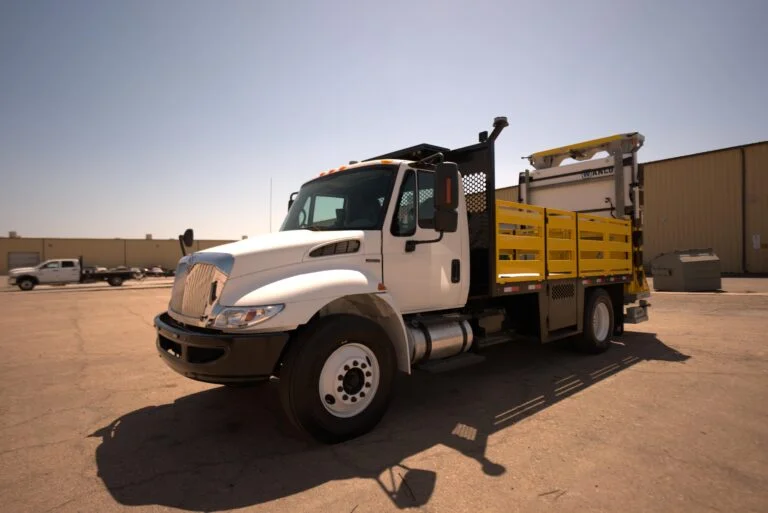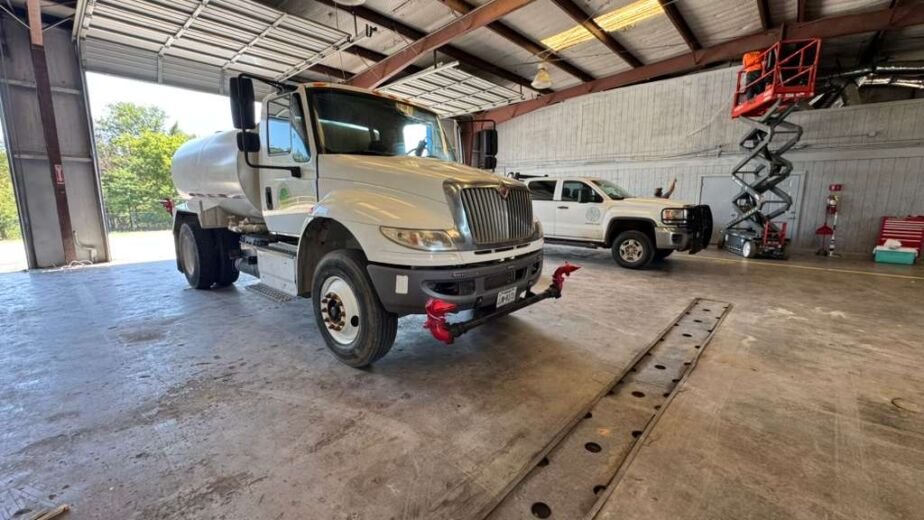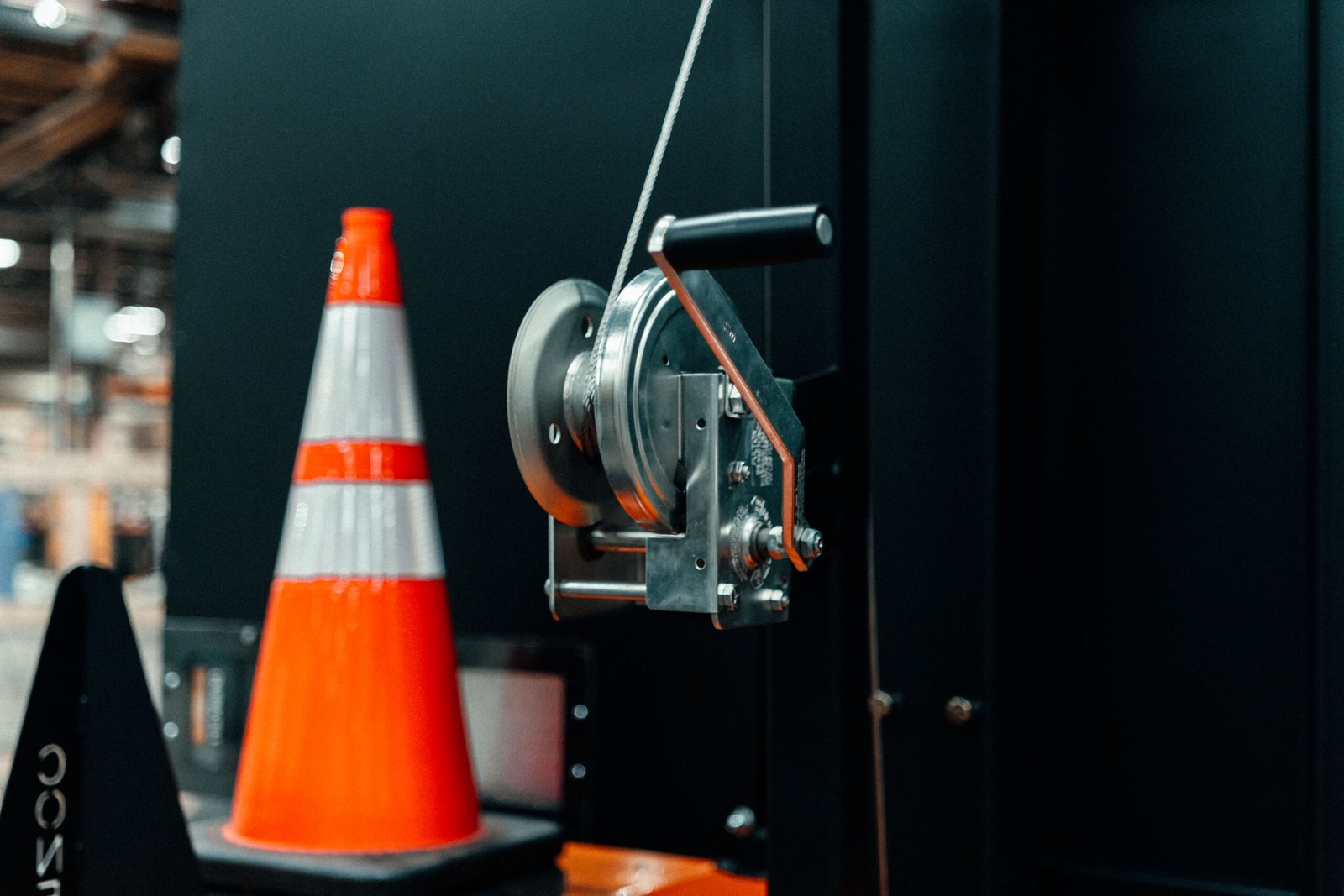
Traffic safety trucks (shadow vehicles, arrow trucks, TMA host trucks (Custom Cone)) spend their entire working life carrying, deploying and retrieving hundreds of cones, tubular markers, vertical panels and other channelizing devices. On a typical day a single truck may set out 150–400 cones across multiple closures, then pick them all up again at the end of shift. Over the course of a year that same truck can handle 30,000–80,000 cone movements.
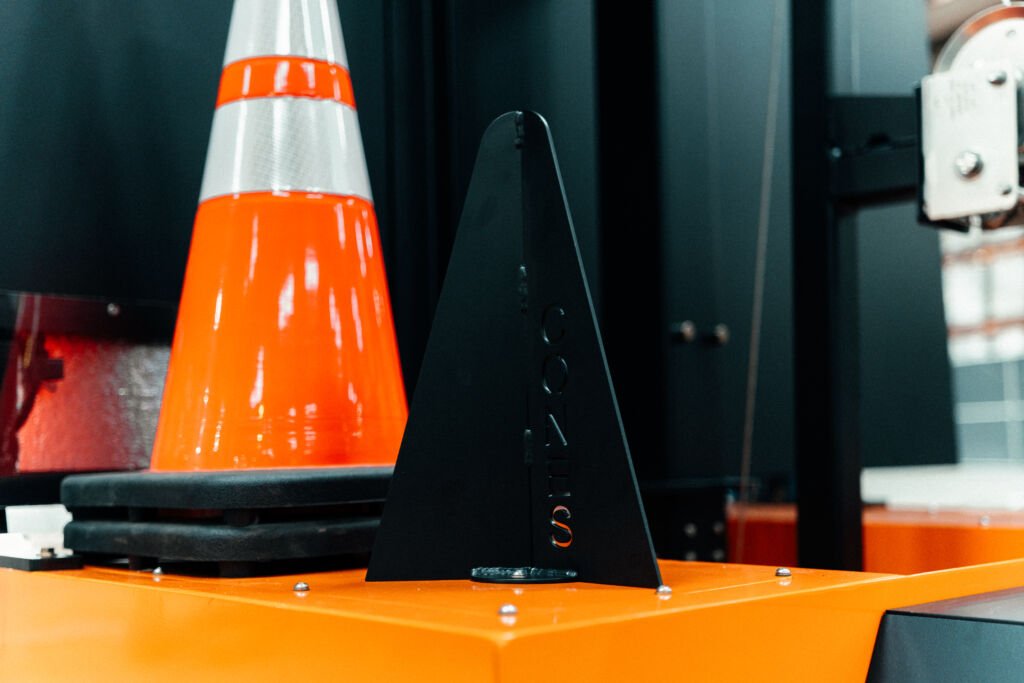
The cone rack is not an accessory — it is the most-used piece of equipment on the truck after the TMA itself. A poorly designed or generic rack causes daily frustration, lost productivity, damaged cones, safety hazards for the operator, and unnecessary wear on the truck. A custom-engineered cone rack, built to match the truck, the crew’s workflow, the cone type, and the project demands, delivers measurable gains in speed, safety, cone longevity, and overall job-site efficiency.
Western Highway Traffic Safety Trucks has designed and fabricated cone storage solutions for more than 340 traffic safety vehicles since 2018. Below are the eight most important reasons custom cone racks outperform off-the-shelf or one-size-fits-all options — and why professional contractors who run high-volume lane-closure operations refuse to go back to generic racks.
1. Faster Deployment & Retrieval = Shorter Closure Duration
Every minute a lane or shoulder remains closed creates community delay, increases crash exposure, and raises liquidated-damage risk on many contracts.
Generic rack problems:
- Cones stacked vertically or in tight bundles → operator must pull one at a time → slow deployment
- No built-in spacing guides → cones laid too close or too far apart → extra walking & adjustment time
- Racks mounted too high or too far back → awkward reach → slower placement
Custom rack advantages (WHT design standard):
- Angled, tiered shelves with 4–6 inch spacing → operator grabs 3–5 cones per motion
- Built-in cone-spacing guides (every 25 ft or 50 ft marked) → correct taper layout first time
- Ergonomic mounting height (waist to shoulder level) → reduced strain & faster cycles
- Side-loading access from both sides of truck → crew can work simultaneously
Measured result: Contractors using our custom racks consistently report 35–55% faster cone deployment and 40–60% faster pickup compared with generic vertical-tube or flat-bed racks. On a 1,000-cone closure that difference can shorten total closure time by 45–90 minutes — directly reducing community delay and exposure.
2. Less Cone Damage = Lower Replacement Costs
Standard cones cost $8–$18 each depending on size, collar type and reflectivity grade. A truck that damages 10–20% of its inventory per year adds thousands in unnecessary expense.
Common damage from generic racks:
- Cones crushed or deformed when stacked vertically without separators
- Reflective collars scraped or torn during loading/unloading
- Bases cracked from dropping onto hard rack edges
- Cones falling off open racks during transport → broken or lost on highway
Custom rack design features that prevent damage:
- Individual cone bays with molded polyethylene dividers → no crushing
- Soft rubber or foam edge protection → collars stay intact
- Angled discharge lips → controlled drop instead of free-fall
- Full-perimeter side rails & netting options → cones stay secure at highway speeds
- Lockable rear gate → prevents loss during transit
Typical savings: Clients report cone replacement costs drop 60–85% after switching to custom racks — often paying for the rack itself within 12–18 months through reduced consumable expense.
3. Reduced Physical Strain & Injury Risk for Operators
Cone handling is repetitive, awkward, and heavy — especially when loading/unloading hundreds per day. Poor rack design forces operators into unsafe postures thousands of times per season.
Generic rack ergonomics issues:
- Vertical tubes require overhead lifting or deep bending
- Flat beds force constant squatting and twisting
- High-mounted racks require reaching above shoulder level repeatedly
Custom rack ergonomics built in:
- Tiered shelves at waist-to-chest height → minimal bending or reaching
- Angled presentation → cones roll forward into hand naturally
- Lightweight composite or aluminum construction → easier on shoulders
- Side-access doors → no need to climb into bed
Outcome: Lower fatigue, fewer back/shoulder strains, better end-of-shift performance, reduced workers’ comp claims. Several clients have documented 40–70% reduction in musculoskeletal injury reports after switching to ergonomically optimized racks.
4. Perfect Fit for Your Specific Truck & Fleet
Off-the-shelf racks are designed to bolt onto the most common chassis — usually flatbeds or stake beds. They rarely fit perfectly on specialized traffic safety trucks (extended frames, toolboxes, fuel tanks, TMA mounts, scissor lifts, etc.).
Custom rack advantages:
- CAD-modeled to exact truck dimensions → no clearance issues with TMA, arrow board, or toolbox
- Mounting points engineered around existing frame rails & cross-members
- Weight distribution calculated to maintain legal axle loads
- Modular sections that can be removed/reconfigured for different job types
Result: No drilling extra holes, no interference with other equipment, no balance problems, and no “it’s close enough” compromises.
5. Compliance & Professional Appearance
Caltrans, city, county and prime-contractor safety meetings increasingly scrutinize the entire shadow vehicle — including cone storage.
Custom rack features that help pass inspections:
- Reflective striping & conspicuity tape integrated into rack design
- Secure tie-down points for load securement certification
- Professional powder-coat finish with fleet-matching colors & logos
- Built-in signage mounts (company name, DOT number, contact info)
A clean, organized, branded rack signals professionalism — which can influence inspector attitude and reduce nitpicking.
6. Scalable for Fleet Uniformity
Once a contractor experiences the productivity & safety gains of a custom rack, they usually want every truck in the fleet to have the same layout.
Our fleet program:
- Master CAD template created from first approved design
- Every subsequent truck built to identical spec
- Bulk pricing on materials & fabrication
- Standardized training & maintenance procedures
Uniform fleet racks simplify inventory management, technician training, and parts stocking.
7. Long-Term Durability & Low Maintenance
Generic racks are often mild steel with minimal finish — they rust, bend, crack, and require frequent repair.
WHT custom rack construction:
- 5052-H32 aluminum or hot-dip galvanized steel (marine-grade when coastal)
- Welded structural frame with gussets at high-stress points
- Powder-coat finish (UV & corrosion resistant)
- Stainless-steel hardware throughout
- 5-year structural warranty standard
Clients report custom racks still look factory-fresh after 5–8 years of daily use — while generic racks often need replacement or major repair in 2–3 years.
Real Numbers from California Contractors (2023–2025)
| Metric | Generic / Off-the-Shelf Rack | WHT Custom Rack | Improvement |
|---|---|---|---|
| Average cone deployment time (500 cones) | 38–52 min | 18–26 min | 50–55% faster |
| Average cone pickup time (500 cones) | 42–60 min | 20–28 min | 52–60% faster |
| Annual cone replacement cost (per truck) | $1,800–$3,200 | $400–$900 | 65–78% lower |
| Reported back/shoulder strain incidents | 2.4–4.1 per truck/year | 0.3–0.9 per truck/year | 75–88% lower |
| Inspector comments on rack organization | Frequent | Rare | — |
Why Contractors Keep Coming Back to Western Highways Custom Racks
- Designed & fabricated in-house in Porterville, CA
- Exact fit for your chassis, TMA, arrow board & toolbox layout
- Ergonomic, damage-resistant, low-maintenance construction
- Reflective & branded for professional appearance & compliance
- Scalable for entire fleet uniformity
- 5-year structural warranty standard
We currently have CAD templates for the most popular traffic safety chassis (Kenworth T880, Peterbilt 567, Freightliner M2, International CV, etc.) — new builds take 3–6 weeks.
Frequently Asked Questions
How much does a custom cone rack cost? $4,800–$11,500 depending on truck size, material (aluminum vs. galvanized), number of tiers, stow options, and add-ons (toolboxes, reflective packages).
Can you retrofit a custom rack on my existing truck? Yes — we measure on-site, design, fabricate, and install in 4–8 weeks.
Do you offer financing? Yes — competitive rates and terms for qualified contractors.
What cone types do your racks support? 28-inch & 42-inch standard cones, tubular markers, vertical panels — custom spacing available.
How do I get started? Call (559) 785-1400 or email info@westernhighwaystrafficsafety.com. We’ll schedule a quick needs assessment call and provide a fixed-price quote.
Stop Wasting Time & Money on Substandard Cone Storage
Cone handling is the most repetitive, time-consuming task on every traffic safety truck. A poorly designed rack wastes hours every week, damages expensive cones, injures operators, and makes crews look unprofessional.
A custom rack built by Western Highways turns that daily chore into a fast, safe, efficient process that pays for itself quickly.
Call (559) 785-1400 or email info@westernhighwaystrafficsafety.com to discuss your fleet needs.
Visit Western Highways Traffic Safety or follow on Instagram and YouTube Shorts for custom rack build videos.
Your crew deserves equipment that works as hard as they do — and makes their day easier, safer, and more productive.